DOT Supervisor Training is typically a one-time, two hour training event, but in reality, it
must be an ongoing educational process for supervisory personnel overseeing regulated safety-sensitive positions. There is great chance of risk and failure for a drug-free workplace program if this does not occur. If an ongoing approach to educating supervisors does not occur, try to get one started. This does not have to be complicated or burdensome, and it does not need to consume much of the supervisor’s time. It does not need to a classroom event, and it can be as simple as a supervisor tips newsletter that includes period education on substance abuse and the supervisor role. READ MORE . . .
https://www.workexcel.com/blog/motivating-managers-in-dot-supervisor-training-to-act-on-the-drug-free-workplace-policy/
DOT reasonable suspicion training courses in PowerPoint, DVD, Video, or Web Courses (click links below to preview). Read our ideas, tips, warnings, and special advice for how to effectively train DOT supervisors (or in non-DOT companies) so they are educated and aware.
Wednesday, July 19, 2017
Tuesday, July 18, 2017
Saturday, July 15, 2017
The Drunk Supervisor: Implications for a Drug and Alcohol Course, DOT Supervisor Training, and Reducing Risk
Supervisors
aren’t immune from alcoholism. That should sound obvious, but they do
have a special set of circumstances, given their positions, that makes
them more unlikely to be identified as under the influence in violation
of the organization’s drug free workplace policy. There’s a problem and a
risk issue present with this situation.
Reasonable suspicion training for supervisors does not include and does not require education for supervisors on self-diagnosis or alcoholic supervisors dealing with their subordinate supervisors.
Likewise, the DOT supervisor training compliance guidelines do not require making supervisors aware of institutional enabling factors that protect the drinker who is a supervisory capacity. This makes reasonable suspicion training an important opportunity to discuss this problem right in the classroom—and get the elephant in the living room exposed—or at least trying to make a meaningful impact on the problem. Learn more
Reasonable suspicion training for supervisors does not include and does not require education for supervisors on self-diagnosis or alcoholic supervisors dealing with their subordinate supervisors.
Likewise, the DOT supervisor training compliance guidelines do not require making supervisors aware of institutional enabling factors that protect the drinker who is a supervisory capacity. This makes reasonable suspicion training an important opportunity to discuss this problem right in the classroom—and get the elephant in the living room exposed—or at least trying to make a meaningful impact on the problem. Learn more
Friday, July 14, 2017
What's the Cost of Alcoholism in the Typical Workplace? Formula for Determining Cost of Alcoholism on Business and Industry
A workforce with 300 employees will be comprised of about 18 alcoholic employees. These employees average approximately 75% their efficiency level. These could be anywhere on the continuum from zero impact on productivity to maximum impact on productivity.
This means there is a 25% loss of productivity for alcoholic drinkers. This includes higher costs associated with accidents, insurance, property damage, theft, sick leave, fringe benefits use and abuse, and a bunch of other difficult to measure impacts.
Peer pressure or experimentation are virtually the only reasons for anyone’s first drink.
The following formula was popularized in the early 1970’s by NIAAA (Average Salary of Workforce X 25%) X (Number of Employees X 6%) = Economic Loss
Example: 1. $33,000 X 25% = $8250
2. 300 X 7% of workforce = 21
3. 21 X $8250 = $173,250
Total Cost of Addiction to Company = $173,250 per year.
Saturday, June 17, 2017
Wednesday, June 14, 2017
Supervisors Should Learn about Withdrawal Symptoms--They Can Be More Threatening
Supervisors and managers overseeing line staff workers learn how to effectively identify specific signs and symptoms of drug and alcohol abuse, and I recommend without reservation that they also learn about withdrawal symptoms associated with non-use, that are crucial to documenting what appears to dysfunctional behavior on the job.
This is a twist on typical reasonable suspicion training, but we believe highly important. Although seldom discussed, drug addicts and alcoholics in middle and late stages may appear without any symptoms whatsoever until they go into withdrawal, at which point they may become highly dysfunctional.
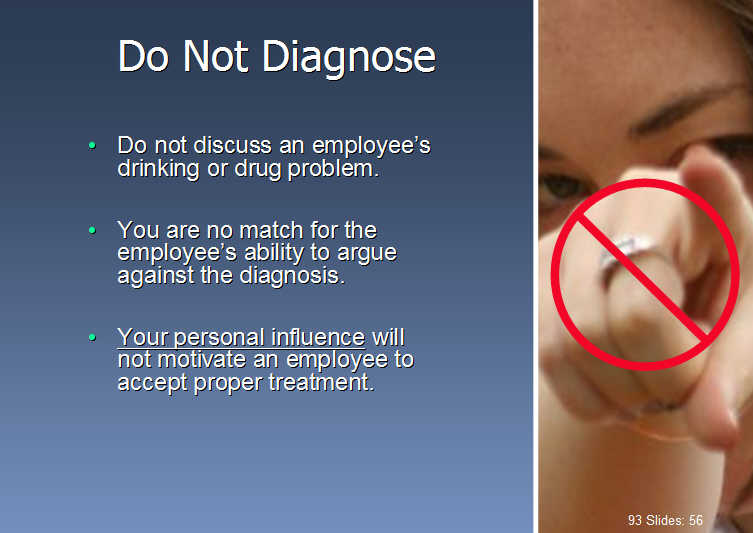
Properly confronting employees does not mean that you get into conflicts with them on the job, but supervisors must know what their leverage is so they can properly motivate the workers found to be potentially under the influence to accept a referral. This free reasonable suspicion training checklist will help. I am only supplying the first page of it here, but you will
find the full product on the shopping cart here.
Monday, June 5, 2017
New Supervisor Skills: First-Time Supervisors and Skills for Leadership
Becoming a supervisor is an exciting promotion, but it comes with a new set of challenges in the workplace. Rising to these challenges will allow you to love your job and failure to do so will create enormous strain. No matter how long you have been a supervisor, refresher courses (small intense courses packed with information that’s practical and instantly applicable) can help you perform your job better. This sort of intense training can help you feel more prepared for any situation that may arise when you are out there on the job. These skills generally fall into the communication camp, because in most cases that is the defining factor of good management. Whether you see to help prevent workplace violence, give feedback, inspire your team, or even apply documentation skills, the underlying skill is good communication. Read more... https://www.facebook.com/reasonablesuspiciontraining/posts/1693318880697361
Subscribe to:
Posts (Atom)
